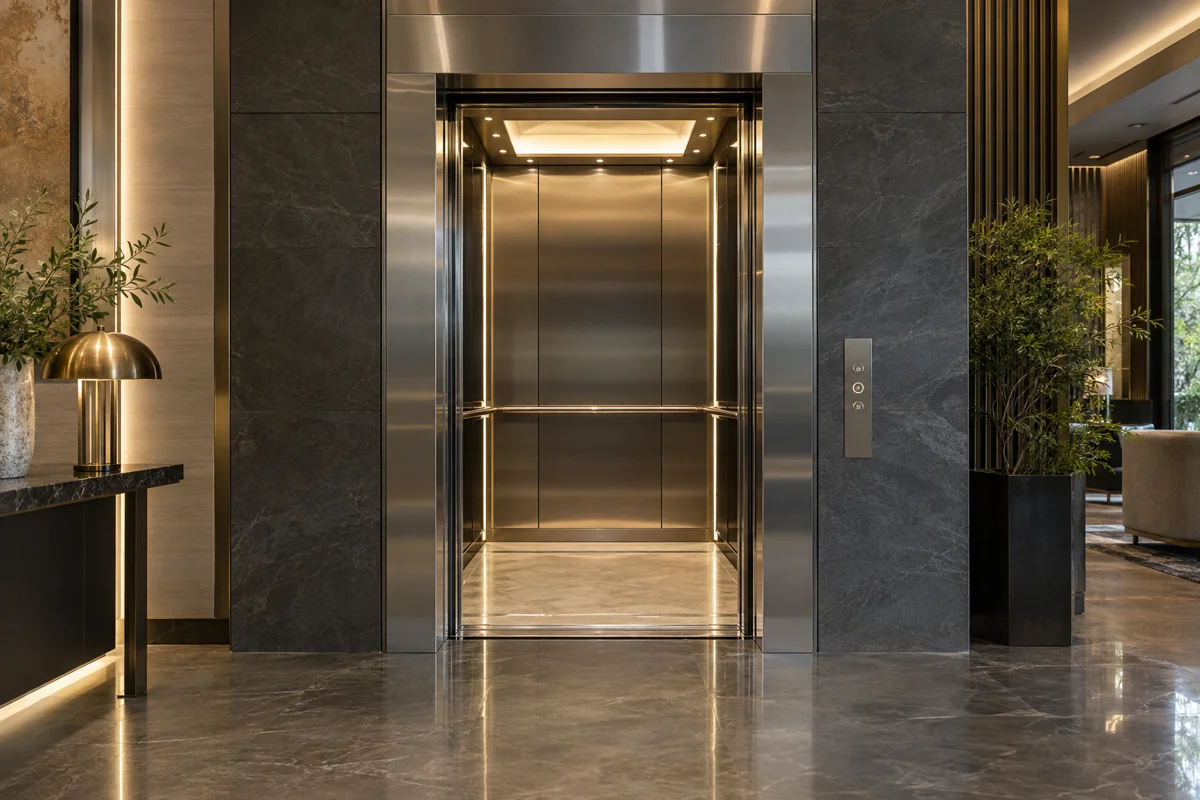
A traction elevator moves its cabin using a motor-driven sheave and suspension ropes or belts, typically balanced by a counterweight. We plan the system around your building and its movement requirements.
Typical applications
Apartments, offices and buildings with regular passenger movement.
Practical benefits
Flexible configuration for the building and its passenger flow.
Selection considerations
Travel height, expected traffic, shaft space and equipment arrangement.
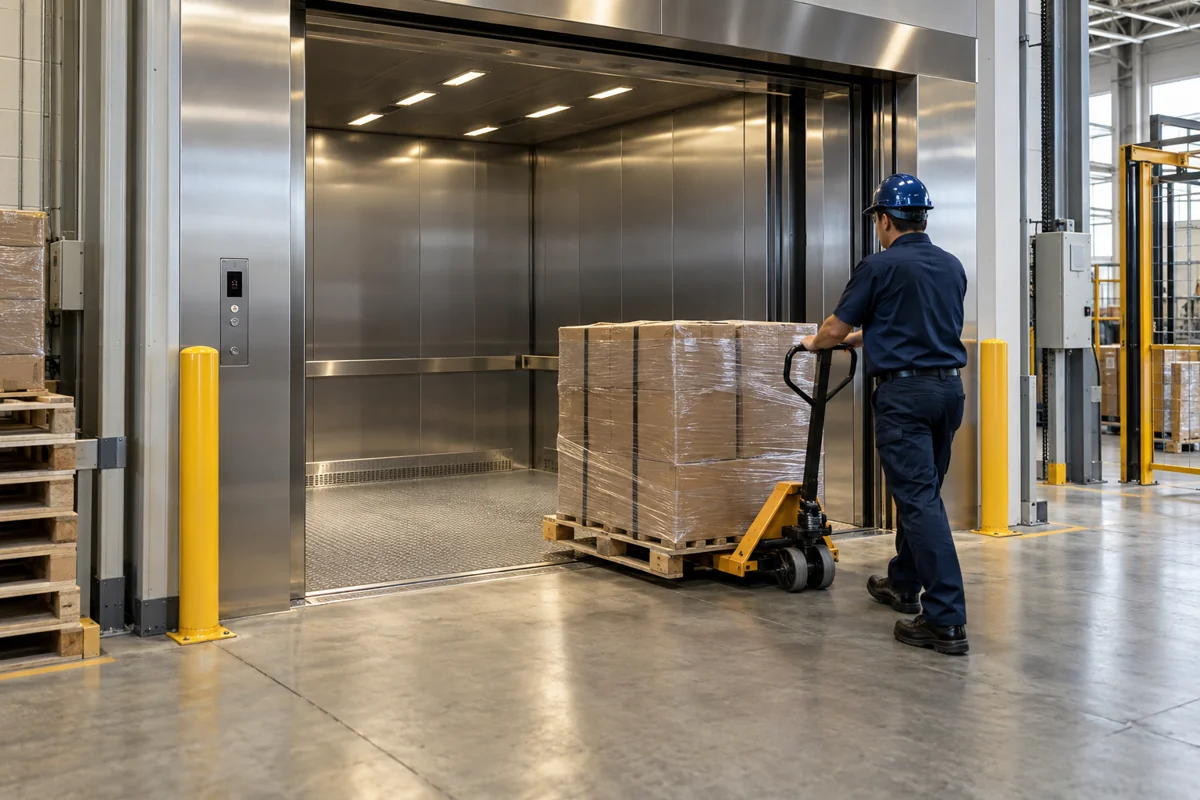
Industrial elevator solutions support the movement of goods or authorised users between working levels. Cabin design and operating arrangements are planned around the material-handling process.
Typical applications
Factories, warehouses and industrial buildings.
Practical benefits
A practical way to connect working floors and support goods movement.
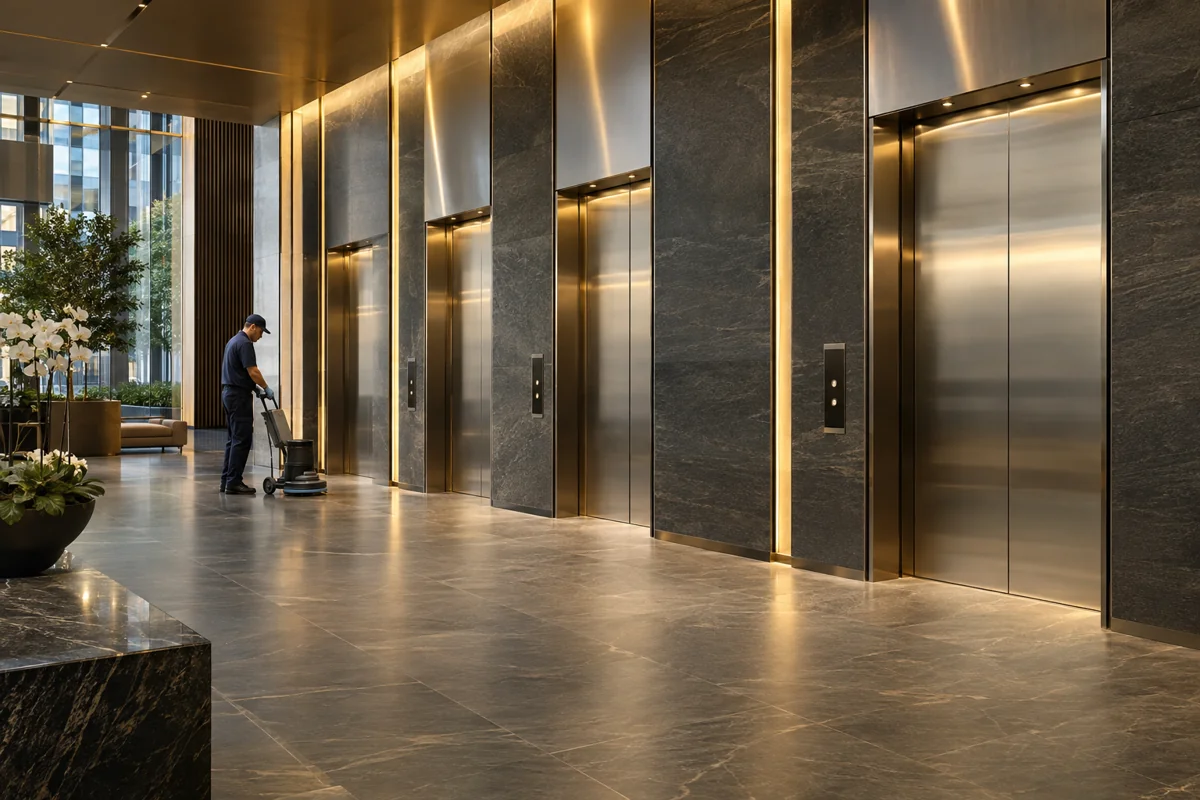
Commercial elevators connect workplaces and shared spaces. We discuss passenger movement, access needs and interior requirements to develop a project-specific solution.
Typical applications
Office buildings, retail spaces and other commercial premises.
Practical benefits
Convenient access between floors with finishes suited to the building.
Selection considerations
Peak passenger traffic, access requirements, number of stops and cabin finishes.
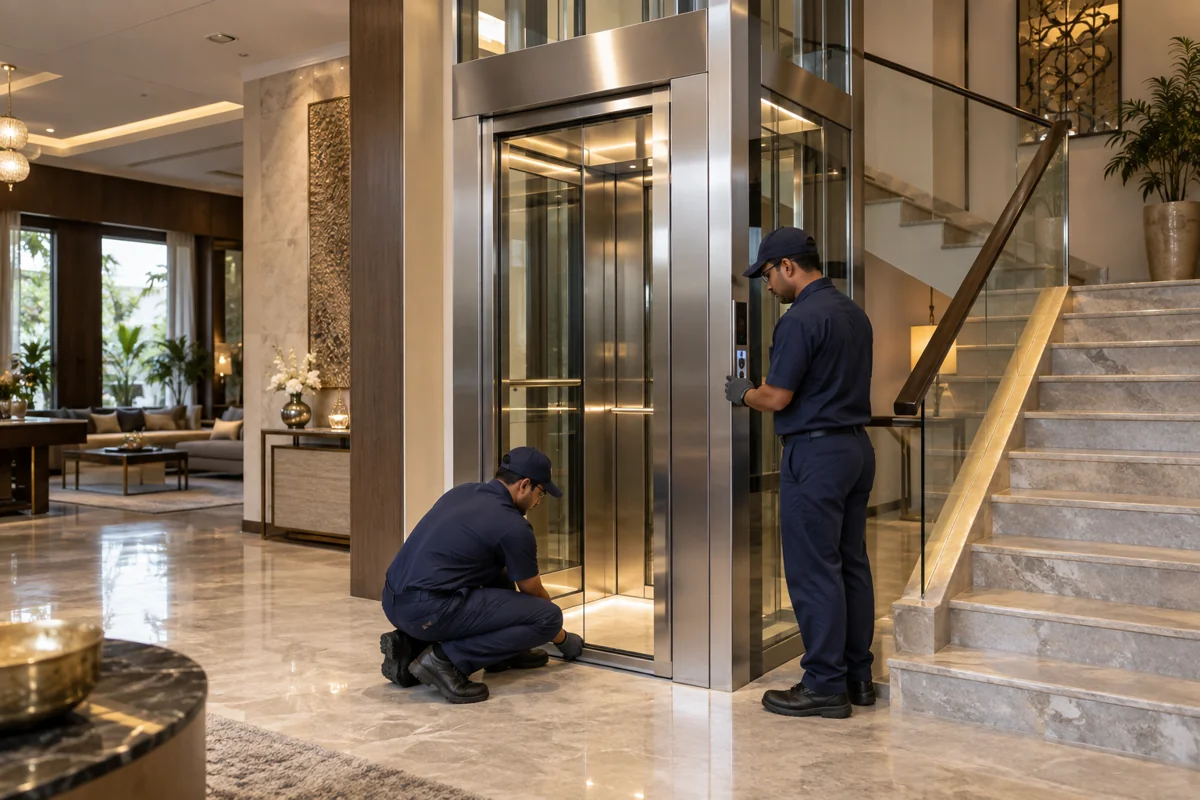
Residential elevators make movement between home or apartment levels more convenient. The design is considered alongside the building structure, available space and daily needs.
Typical applications
Individual homes, villas and apartment buildings.
Practical benefits
Everyday convenience and improved access between residential floors.
Selection considerations
User needs, space, entry arrangement, building structure and finish preferences.
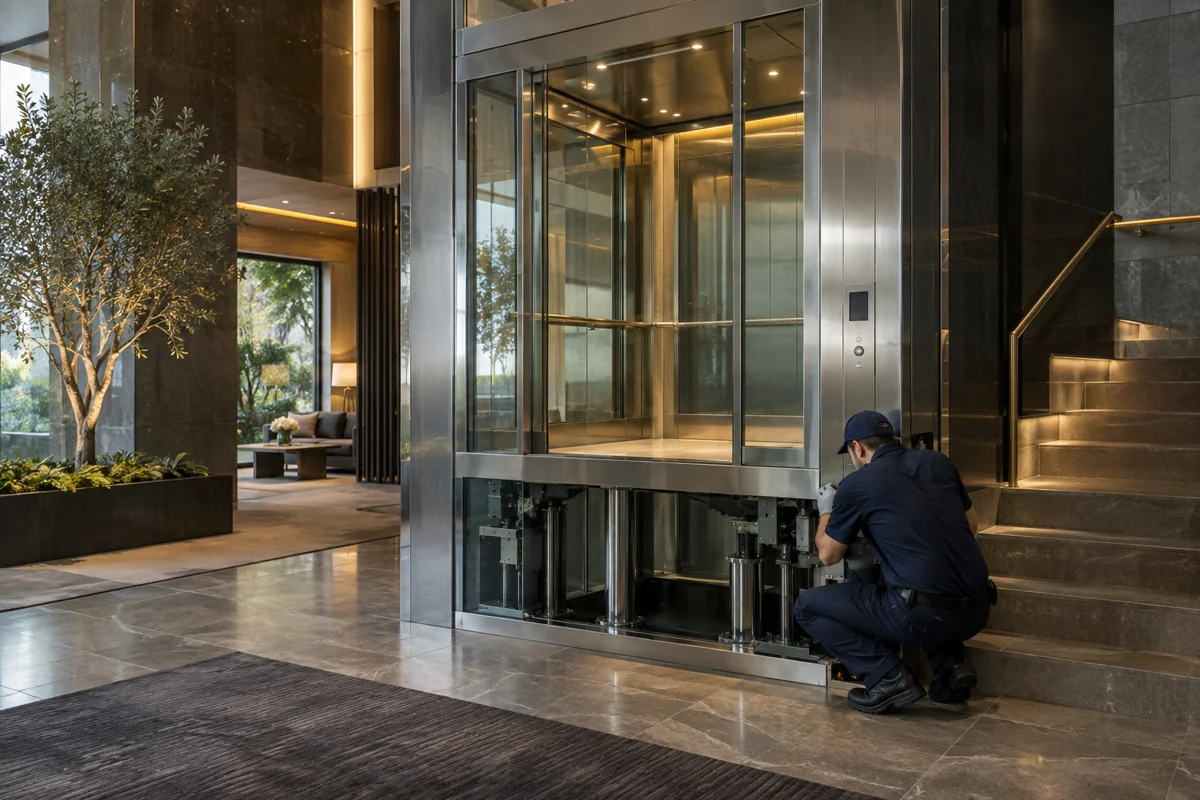
A hydraulic elevator uses a fluid-powered cylinder to raise the cabin and controlled fluid release to lower it. Its suitability is assessed against the building layout and intended use.
Typical applications
Suitable low-rise residential, commercial and selected goods-lifting projects.
Practical benefits
An alternative lifting arrangement where project conditions suit a hydraulic system.
Selection considerations
Travel, capacity, available space, power requirements and maintenance access.